Scope Measurement
Hints
Capture
Fast, Low-Duty-Cycle Pulses Using Peak Detect
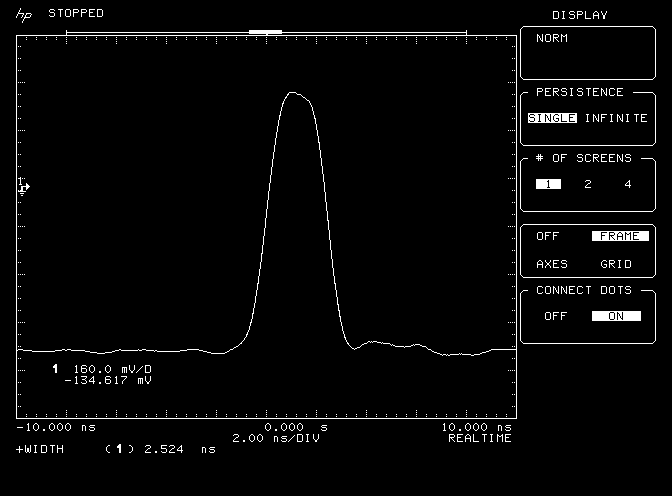
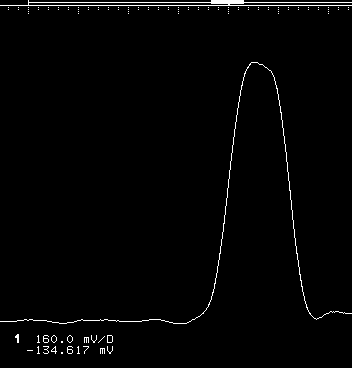
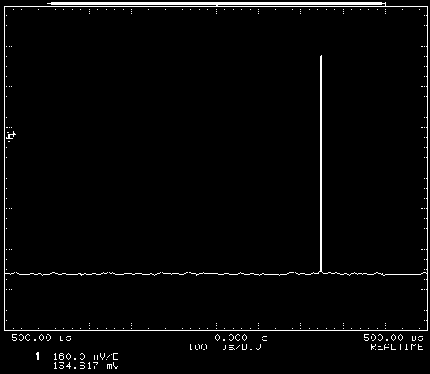
Capturing narrow pulses such as the 2.5 ns pulse
shown in Figure 1 is not a problem for high speed digitizing scopes.
Figure
1
However,
this pulse is part of a pulse train with a duty cycle of just .002%.
In order to view the long time span between the narrow pulses, the
sweepspeed must be reduced. With conventional sampling techniques,
the scopeís sample rate is reduced such that the scope is no longer
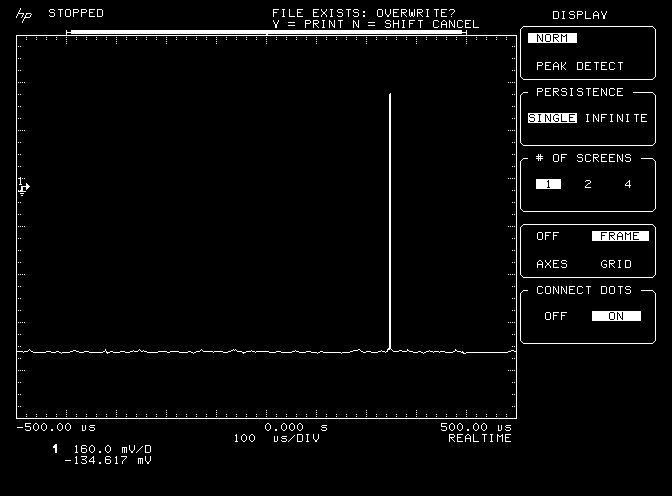
able to capture points on the narrow pulses. In the example shown
in Figure 2, the scope samples at 500 KSa/s on the 100 microseconds/div
timebase range and only randomly catches a point on one of the narrow
pulses. The statistical odds of capturing a 2.5 ns pulse with a
2 microsecond sample interval is just 0.125% per acquisition.
Figure
2
However,
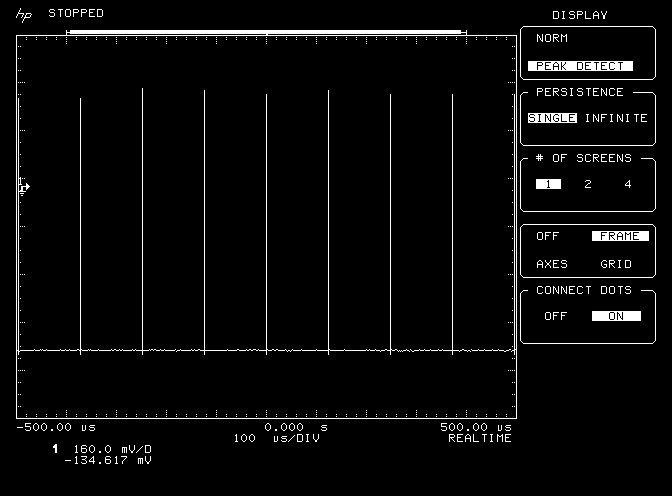
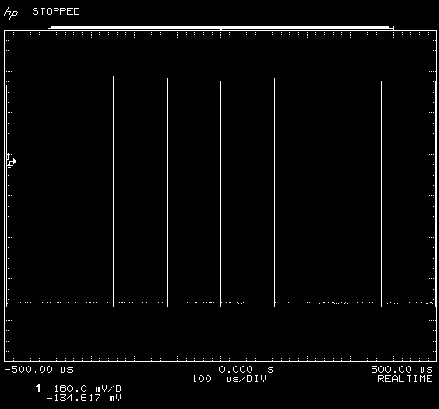
by using peak detect mode, you can capture pulse trains with widths
as narrow as 1 ns with 100% confidence, regardless of your scopeís
sweepspeed. See Figure 3. Peak detect is a display mode that maintains
the maximum sample rate of the scope independent of the sweepspeed.
The max and min values are saved and displayed on the scope. Without
peak detect, many of these max and min values would have been thrown
away. The minimum pulse width that can be captured is a function
of the sample rate of your scope.
Figure
3
|