Scope Measurement
Hints
Analyze
Harmonic Distortion Using FFT
With
amplifiers so widely used in electronic devices, harmonic distortion
is a common problem faced by design engineers.
To
characterize a prototype amplifier, you can input a spectrally pure
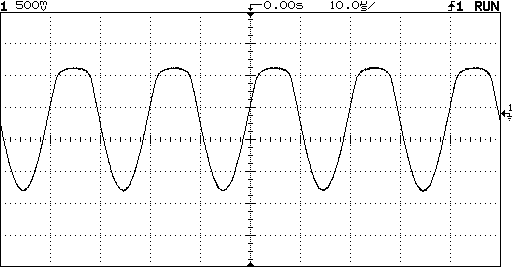
sinewave and look at the amplifier output on your scope. In this
example (Figure 1), the sinewave looks distorted. To get a different
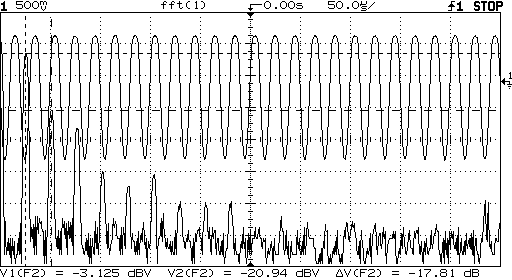
point of view, try doing an FFT of the sine wave (Figure 2). Observe
the harmonics.
The
FFT gives you more quantitative information on how much harmonic
distortion there is in the amplifier design. The fundamental frequency
is at 50 kHz. The second harmonic at 100 kHz is only 17.81 dB down
from the fundamental, indicating serious harmonic distortion. Built-in
FFT capability in a scope lets you take a quick look at the frequency
domain, in addition to the time domain.
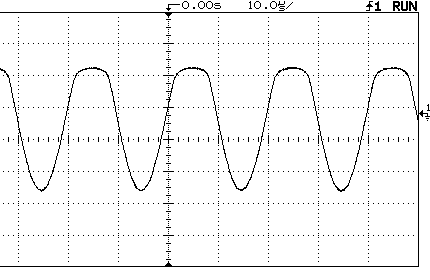
Figure
1
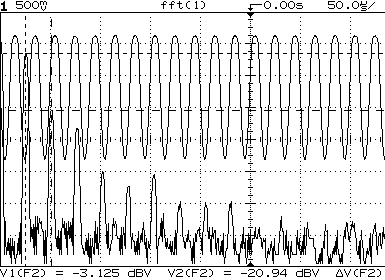
Figure
2
|