Scope Measurement
Hints
Troubleshooting Infrequent Events
When
trouble shooting or characterizing a circuit, take advantage of
the triggering capabilities of your scope. Some scopes are able
to time qualify the trigger. You can tell the scope to trigger only
if it sees an event wider than, or narrower than, a specified width.
This is very useful when looking for infrequent events.
For
example, if you know that a strobe pulse must be at least 30 ns
wide, you can set up your scope to trigger on a pulse which is <
30 ns. The trigger circuit will look at every pulse, if pulses are
at least as far apart as the reset time for the trigger circuit.
If the scope triggers, thereís a problem. If it doesnít trigger,
there isnít a problem. Scopes can process tens of millions of events
per second in this way.
In
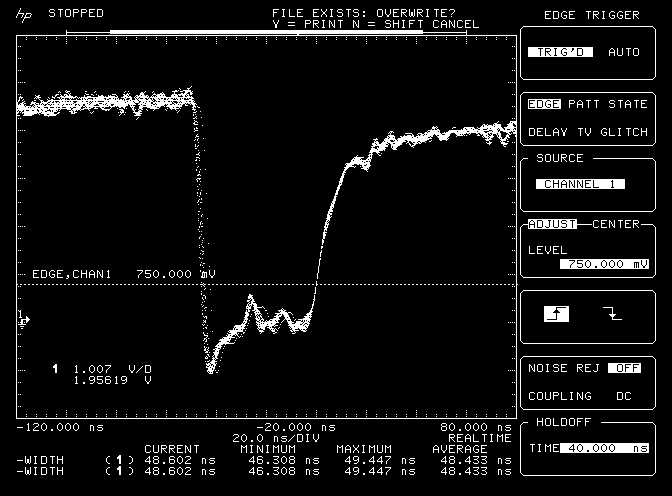
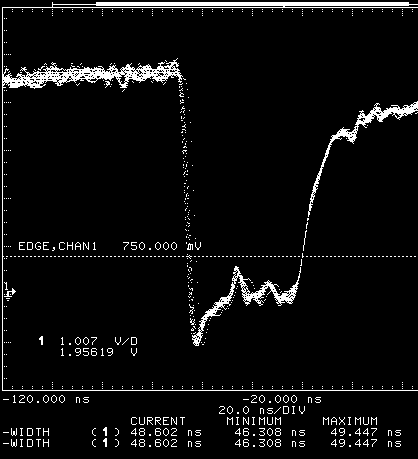
Figure 1 the scope is edge triggered on a rising edge of channel
1 and the strobe pulse appears to be good (³ 30 ns wide).
Figure
1
In
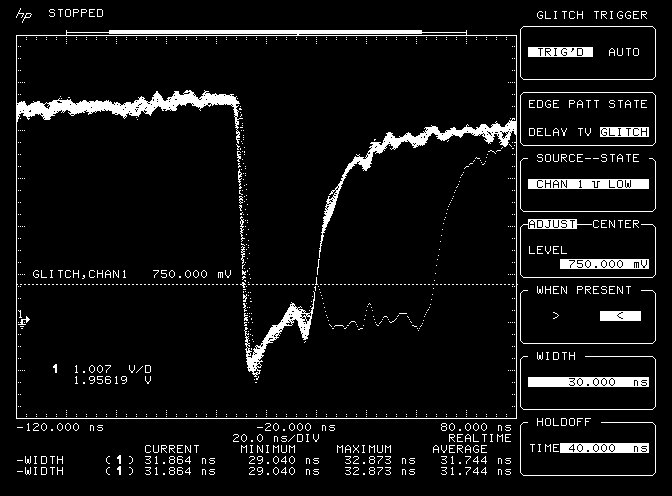
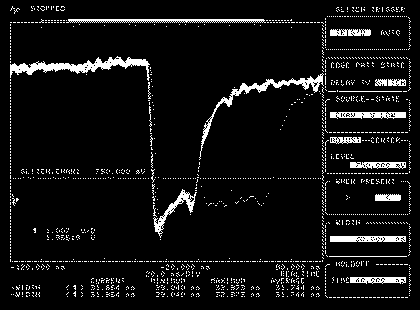
Figure 2, the scope is set up to trigger on a negative-going pulse
that is present for less than 30 ns. The scope triggered, verifying
that sometimes the strobe pulse is bad (< 30 ns wide).
Figure
2
|